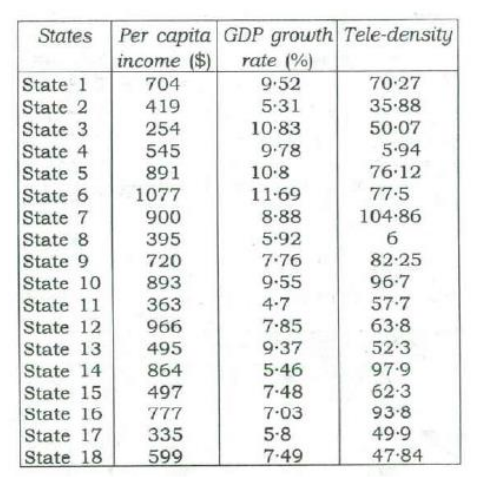
ऊपर दी गई तालिका के संबंध में, निम्नलिखित पूर्वधारणाएँ बनाई गई हैं :
1. आजकल, पहले से ही उच्च निष्पादन करने वाले किसी राज्य की संपत्ति दूरसंचार अवसंरचना में वृहत निवेशों को जारी रखे बिना कायम नहीं रखी जा सकती।
2. आजकल, बहुत उच्च दूरसंचार सघनता किसी राज्य में व्यवसाय एवं आर्थिक विकास को प्रोत्साहित करने के लिए एक सबसे महत्वपूर्ण शर्त है।
उपर्युक्त में से कौन-सी पूर्वधारणा/पूर्वधारणाएँ वैध है/हैं?
सही उत्तर: न तो 1 और न ही 2
- पूर्वधारणा 1 अवैध है क्योंकि यह एक अत्यंत कठोर और निरपेक्ष स्थिति प्रस्तुत करती है कि दूर-संचार अवसंरचना में भारी निवेश के बिना किसी समृद्ध राज्य की समृद्धि को "कायम नहीं रखा जा सकता"। यद्यपि दूरसंचार महत्वपूर्ण है, किंतु किसी राज्य की आर्थिक समृद्धि को बनाए रखना शासन प्रणाली, मानव पूंजी, और अन्य भौतिक बुनियादी ढाँचों जैसे कई विविध कारकों पर निर्भर करता है। - पूर्वधारणा 2 भी अवैध है क्योंकि यह दावा करती है कि बहुत उच्च दूरसंचार सघनता व्यावसायिक और आर्थिक विकास को बढ़ावा देने के लिए "एक सबसे महत्वपूर्ण शर्त" है। यह एक अतिशयोक्तिपूर्ण निष्कर्ष है जिसे उपलब्ध आंकड़ों या सामान्य आर्थिक सिद्धांतों द्वारा प्रमाणित नहीं किया जा सकता, क्योंकि बिजली आपूर्ति, कुशल श्रम और व्यापार सुगमता जैसे कारक भी समान रूप से महत्वपूर्ण हैं। चूँकि दोनों पूर्वधारणाएँ अतिवादी और अपुष्ट हैं, इसलिए न तो 1 और न ही 2 वैध हैं। अतः विकल्प D सही उत्तर है।
In English (Question & Model Answer)
With reference to the table of GDP growth rate and Tele-density data, the following assumptions have been made :
1. Nowadays, prosperity of an already high performing State cannot be sustained without making further large investments in its telecom infrastructure.
2. Nowadays, a very high Tele-density is the most essential condition for promoting the business and economic growth in a State.
Which of the above assumptions is/are valid?
Correct Option: Neither 1 nor 2
- Assumption 1 is invalid because it presents an extreme and absolute condition: that prosperity "cannot be sustained" without further large investments in telecom infrastructure. While telecom infrastructure is beneficial, sustaining economic prosperity depends on a multi-dimensional array of factors such as governance, human capital, and other physical infrastructure. - Assumption 2 is also invalid because it claims that a very high tele-density is "the most essential condition" for promoting business and economic growth. This is an overstatement and is not supported by the data or general economic theory. Many other factors, such as reliable power supply, ease of doing business, and skilled labor, are equally or more critical for economic growth. Since both assumptions are extreme, unproven, and make unjustifiable logical leaps beyond the scope of the provided data, neither 1 nor 2 is a valid assumption. Thus, Option D is the correct answer.